News & Insights
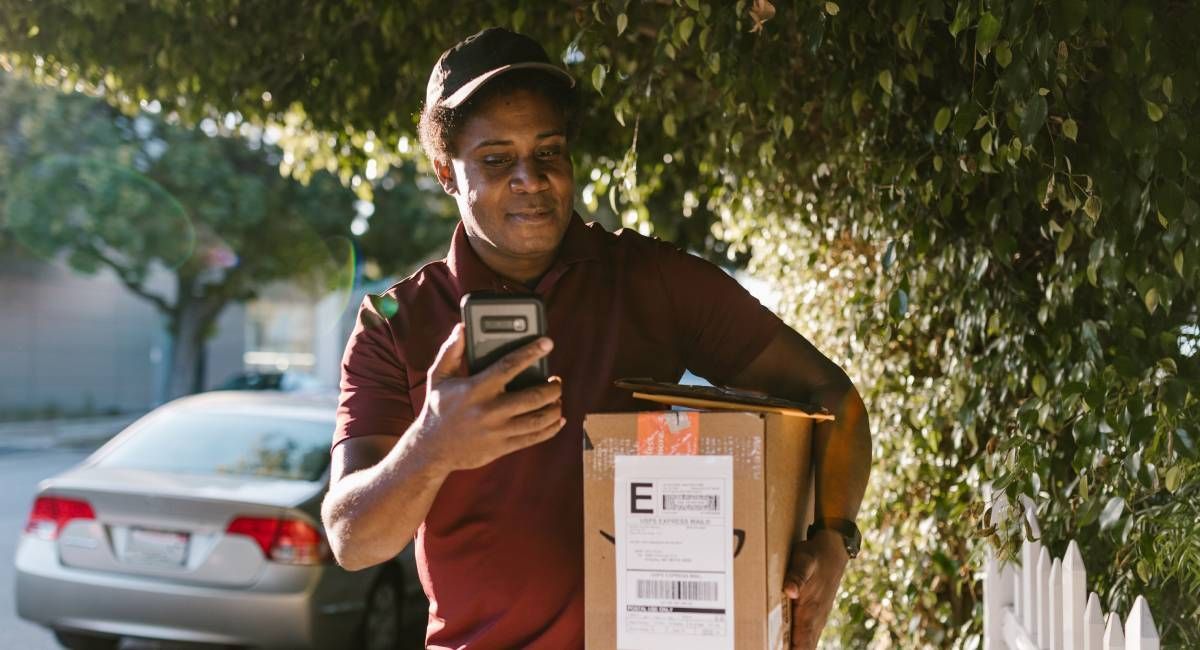
What is PAF? The Postcode Address File (PAF®) is Royal Mail’s definitive database of every deliverable address and postcode in the UK. It covers over 32 million delivery points and is updated monthly. If your business relies on accurate address data, at checkout, in your CRM, or for deliveries, PAF is the source that keeps it current. September 2026 in numbers Royal Mail made 46,649 changes to PAF this month. It represents new homes that need delivering to, businesses that have moved or closed, streets that have been renamed, and addresses that were simply wrong and have now been corrected. Every one of those changes is a record in someone’s database that may now be out of date. And potentially a delivery or customer communication that could go wrong if the data hasn’t been updated. Delivery point changes at a glance Here’s the full breakdown of what changed, was amended, or removed from PAF in Aug:

Peak season amplifies everything. Orders, revenue, and every data problem you haven't dealt with yet. Black Friday and the Christmas run-up are when eCommerce businesses make their numbers. They are also the pressure points when every unresolved data problem gets expensive. A checkout that frustrates customers in March frustrates ten times as many in November. Customer databases with address errors that generate a handful of failed deliveries in a quiet month generate hundreds during peak season. The volume doesn’t create the problem; it just makes the one that was already there impossible to ignore. Most preparation for the busy season focuses on inventory, fulfilment, and marketing. Data rarely makes the list, despite being the foundation that checkout conversion, delivery success, and post-purchase communication all depend on. It's far easier to get it right before the season starts than trying to manage the fallout when it doesn't. Here is what is worth checking, and why it matters now rather than in January: Your checkout validation A slow, clunky checkout chips away at your conversion rate. Validation fixes that: fewer drop-offs, more trust at the point of purchase. Autocomplete that works quickly keeps the customer moving, postcode lookup draws on current Royal Mail PAF data to catch new builds and recent changes, and email and phone validation means everything sent to the customer after checkout actually reaches them. When customers are buying quickly on mobile and have less patience for friction, the difference between a checkout that validates smoothly and one that fights back is measurable in conversion rate. Now is the time to actually test it. Run a few test addresses through your checkout. Try a postcode for a new development in your area. Check how it handles a flat number or a building name. If any of those cause problems in a test, they will cause problems for real customers during your busiest week of the year. Your customer database If you send email campaigns, remarketing lists, or direct mail appeals ahead of peak season, then the quality of your customer database determines how much of that effort actually reaches anyone. Contact data decays at around thirty percent per year. For a database that hasn't been cleansed recently, a significant proportion of your records may have postal addresses, email addresses , or phone numbers that are no longer current. Running a campaign to a list in that state means a portion of every send goes nowhere, and the customers it was supposed to reach simply don't receive it. A data cleanse is one of the highest-return activities an eCommerce team can do approaching Black Friday. It costs a fraction of a campaign budget, and it means the campaign budget actually works. Reactivation revenue attributed to a cleaned list is real. Revenue attributed to a list with thirty percent decay baked in is partly wishful thinking. The average cost of a failed delivery is £11.60. Multiply that by peak season volume and the cost of an uncleansed database becomes concrete very quickly. From checkout to doorstep A validated address gets a parcel to the right building. What happens after that depends on whether your delivery partner can actually reach the customer. Tracking notifications, delivery window confirmations, and access instructions all depend on a live email address and a working phone number. When carriers are operating at capacity over the Christmas period, and redelivery slots are hard to come by, a failed first-time delivery attempt is more disruptive than at any other time of year. 70% of shoppers say they will not return to a retailer after a single delivery failure. When acquisition costs are at their highest and competition for customer loyalty is at its most intense, that retention risk matters more than usual. Fetchify works alongside nShift , a delivery management platform connecting businesses to over 1,000 carriers across 190 countries through a single integration. Where Fetchify validates the address, email, and phone data at the point of capture, nShift handles carrier selection, tracking, and returns on the other side. nShift's own data shows a 20% increase in checkout conversion and up to 60% fewer customer queries about order status when both parts of the chain are working properly. For businesses managing multiple carriers or shipping cross-border, having both the data and the delivery layer operating reliably removes two of the most common causes of failures at the worst possible time. When a postcode isn't enough For customers who have recently moved into new developments, apartment buildings, or multi-occupancy properties, standard postcode lookup often doesn't recognise their exact address, or returns results that don't include their flat or unit number. It's a data gap that exists year-round, and at high order volumes it becomes harder to absorb. Fetchify's Multiple Residence Data covers over 900,000 properties of this type, and Not Yet Built Data covers a further 700,000 UK properties in planning or under construction, so addresses for new developments are available before they appear in Royal Mail's main database. Even for addresses that do exist in the database, a postcode doesn't always get the driver to the right door. For rural properties, large sites, or new developments where postcodes cover a wide area, the pin a courier app drops is often an estimate. Fetchify's Rooftop Geocodes provide precise latitude and longitude coordinates for the property itself, giving courier apps and delivery software a precise pin to work from rather than an approximation. Insurers and councils already use the same kind of data to understand access and risk at property level. For delivery, it's the same principle applied earlier in the chain. When to act Fail to plan, then plan to fail. Black Friday and Christmas are the busiest sales periods of the year, and they are coming fast. Whether it is email addresses, phone numbers, or postal details, a single wrong entry multiplies quickly at peak volume: a bounced confirmation or a failed delivery right when it matters most. If any of the above has prompted a question about your own setup, the right time to look into it is now, while there is still time to act. The season rewards preparation and makes the absence of it expensive. To see what a data cleanse actually looks like in practice, and what it changed almost overnight for one business that acted on it, read our Phoenix Insolvency case study Get your data peak-season ready Fetchify's validation and data cleansing tools cover address, email, phone, and UK bank account validation . Speak to the team at fetchify.com/contact or start a free trial .

Data quality is usually framed as a commercial problem. But for charities, inaccurate donor records have consequences that go well beyond a failed delivery. Every donor record in a charity database represents a relationship. Someone chose to give, trusted the organisation with their details, and expected to stay connected. When those details quietly go out of date, that connection starts to break down without anyone noticing. It happens gradually. An address changes, email gets abandoned, or a phone number is reassigned. None of it shows up as a problem immediately. The record still exists. The donor still appears active. But communications go nowhere, and in some cases, income already given isn't being claimed. The Gift Aid dimension Gift Aid is one of the most tangible ways that donor data quality translates into money. For HMRC to process a Gift Aid claim, the donor's address on file needs to match their tax record. When a donor moves house and the charity's database isn't updated, that match breaks down. The donation was made. The declaration was signed. The relief cannot be processed. Over £560 million in Gift Aid goes unclaimed by UK charities every year. Incomplete and out-of-date donor records account for a significant share of that figure. That is not money that was refused or withheld. It is money the charity was entitled to and could not access, because the data behind the claim was no longer accurate. For many organisations, the Gift Aid they are missing is not a small rounding error. It is a meaningful sum, spread quietly across a database that has never been properly maintained. It’s not just addresses Address decay gets the most attention in data quality conversations, partly because it is the most visible. But email addresses and phone numbers decay just as reliably. A supporter whose email has changed does not receive a thank-you letter, a renewal prompt, or a Gift Aid receipt. A wrong mobile number means a year-end appeal arrives nowhere. For charities running regular giving programmes on direct debit, banking details carry their own risk. A donor changes their bank account. The existing mandate becomes invalid. The payment fails quietly, and a regular gift stops without the donor ever intending to cancel. By the time the lapse is noticed, months of relationship-building have been lost alongside the income. Each of these is a separate failure point, but they share the same root cause. Data that was accurate when it entered the system has drifted, and nobody has looked closely enough at the database to see how far. Getting back on track, and staying there For most charities, the starting point is understanding the current state of the database. A data cleanse matches existing records against current address, email, and phone data, identifying where details have changed and what is still accurate. It gives the organisation a clear picture of who is genuinely reachable and who has drifted out of contact. For many, that picture is more recoverable than expected. Donors who appear lapsed are sometimes simply unreachable at an old address, and finding them again is a matter of data rather than re-engagement strategy. Once the database is in good shape, keeping it there is largely about what happens at the point of capture. When a donor gives online, signs up at an event, or updates their details, validating their address, email, phone, and bank details in real time means accurate information enters the system from the start. The cleanse that would have been needed further down the line often isn't, because the problem never got in. Neither of these is a large project. They are practical steps that compound over time, and the charities that take them tend to find that their fundraising performs better, their Gift Aid claims go through more reliably, and their donor relationships last longer. If it has been a while since anyone looked closely at the accuracy of your donor database, it is probably worth doing. Not as a major undertaking, but as a straightforward question: how much of what we think we know about our donors is still true? Fetchify helps charities keep donor records accurate at the point of capture and across existing databases. Click below for more details.

It looks like a carrier failure. Underneath it, it's usually the same bad address problem retail already knows well, just with a different name and a bigger bill. A pallet leaves the depot on time. Good driver, correct route. It arrives at the right street and the wrong building, because the address on the consignment note was missing a unit number that existed in the warehouse system but never made it onto the label. The driver calls it in. Someone reroutes it. The customer gets their delivery a day late, and nobody upstream ever finds out why. Nobody made an obvious mistake here. The routing was right. The driver did their job. What actually failed was the data underneath all of it, and that failure is far more common than most logistics operations treat it as. The leading cause hiding under an operational label Failed and misrouted deliveries get logged as operational problems: a carrier issue, or a routing error. But across the industry, the same root cause keeps showing up underneath the label. Inaccurate or incomplete addresses are consistently cited as the leading cause of failed delivery attempts: a missing apartment number or a transposed postcode. Roughly one in ten deliveries fails on the first attempt. One in ten that should have arrived on the first try and didn't, each triggering a redelivery or a callback to the depot. Multiply that across a few thousand consignments a month, and it stops being a rounding error. Address isn't the only failure point either. A growing share of last-mile coordination depends on reaching the customer directly: a text to confirm a delivery window, a call to arrange access. An incorrect phone number or a mistyped email breaks that link just as effectively as a wrong postcode. The parcel reaches the right building, but the driver can't reach anyone to confirm a safe place or agree a new time. Why the last mile makes this worse The last mile, the journey from depot to final address, is consistently the most expensive and most failure-prone leg of the whole delivery chain, accounting for as much as half of total shipping cost on some estimates. It's also where a bad address does the most damage, because by the time a consignment reaches this stage, the cost of turning it around is no longer a data fix. It's a re-routed van and a driver's afternoon gone. An address error caught at the point a shipment is booked costs almost nothing to fix. The same error caught by a driver standing outside the wrong building costs a redelivery, and a customer who now has a story about your service. What this actually costs UK failed deliveries cost retailers in the region of £1.6 billion a year, with the average failed delivery attempt costing around £11.60 once redelivery, customer service time, and wasted mileage are counted. Across a network moving thousands of consignments a week, that's not an occasional bad day. It's a predictable, recurring cost sitting quietly inside the operational budget, usually filed under fuel or carrier fees rather than the data problem that actually caused it. It also distorts the numbers used to manage the operation. A depot with a higher-than-average failure rate looks like it has a route or carrier problem, when the real issue might be that a disproportionate share of the addresses feeding into that depot were never validated to begin with. The fix sits before the parcel is booked, not after The instinct when a delivery fails is to fix the process that handles the failure: better redelivery workflows, clearer driver instructions. All useful. None of it addresses the address itself. The more useful moment is earlier, validating the address, phone number, and email at the point they enter the system, whether that's a consignment booking or a warehouse management system pulling data from somewhere else entirely. Caught there, a malformed address or an unreachable contact number gets corrected before a route is planned around it, not after a driver has already made the trip and can't get anyone on the phone. If your operation is seeing failed deliveries logged as carrier or routing problems, it's worth checking how many of them trace back to an address, phone number, or email that was wrong from the moment it was captured. More on how Fetchify helps logistics and transport businesses validate contact data at the source below.

Guest data captured at the point of booking is quietly falling apart before the stay even begins, and peak season is when it costs the most. A guest books a weekend away for the August bank holiday. Room type, dates, total cost, all confirmed on screen. Then nothing. No confirmation email lands in their inbox. Ten minutes later, they're calling the front desk to check the booking actually went through. Nobody did anything wrong here. The booking engine worked. Payment went through. What broke is quieter than that, and far more common than most hospitality businesses realise. The address you have isn't always the address you think you have A significant share of hotel bookings now arrives through an OTA (an online travel agency, like Booking.com or Expedia) rather than direct. That's not new. What's less well understood is what actually lands in the property management system when they do. Many OTAs pass through a masked or proxy email address rather than the guest's real one, generated specifically for that booking and often expiring shortly after the stay ends. It looks like a valid email address. It behaves like one, right up until the property tries to use it for anything beyond the original booking confirmation. Direct bookings aren't much safer. Industry estimates put the proportion of invalid addresses from manually entered guest data at 20 to 45%, a misspelt domain, a transposed digit, a typo made booking late at night on a small phone screen. None of that shows up as a problem until the moment it matters: a pre-arrival email, a late check-in code, a parking permit, a table reservation confirmation. Why this one email matters more than most Booking confirmations aren't treated like other guest communications, because guests don't treat them like other emails. Open rates for confirmation emails run considerably higher than standard marketing sends, and the expectation isn't "eventually"; it's immediate. A guest expects that confirmation within minutes, not by the end of the day. If it doesn't land straight away, the natural read isn't "it's still processing"; it's "something's gone wrong". A guest who doesn't receive a confirmation doesn't shrug it off. They worry, then they call, then someone on your team spends five minutes confirming something that should have taken none. Peak season is when this compounds None of this is especially visible in a quiet month. A handful of bounced confirmations, a few guests calling to check, easily absorbed. Peak season changes the maths. Higher volumes mean more bad records moving through the system at once, and less staff time available to catch each one before it becomes a guest's problem rather than a data problem. The property that could quietly absorb ten failed confirmations in March is dealing with a hundred in August, right when front desk and reservations teams are already stretched thinnest. Peak season doesn't create this problem. It just makes the one that was already there impossible to ignore. What this actually costs The cost isn't just the phone call. A guest who's already anxious about whether their booking is real arrives in a different frame of mind than one who received a warm, accurate pre-arrival email three days before. Upsell opportunities in that pre-arrival window - an early check-in, a room upgrade, a spa slot, depend on the guest actually receiving it in the first place. None of that happens if the address behind it was never valid to begin with. The fix sits earlier than most teams look The instinct when a confirmation bounce is to fix it after the fact: resend, follow up by phone, apologise. The more useful moment is earlier, verifying email and phone at the point they're captured, whether that's a direct booking form or a reconciliation step against whatever an OTA has actually handed over. In practice, that looks like validation built into the booking form itself: if a guest mistypes their email, the system flags it before they hit submit, the same way a checkout might flag an invalid card number. This is exactly what Fetchify does for hospitality businesses: verifying contact details at the source, so the confirmation, the pre-arrival email, the parking permit, all have somewhere real to land. Caught there, it never becomes a guest-facing problem at all. Getting this right at the point of entry does more than protect a confirmation email. It's a faster, less frustrating booking process for the guest, since a flagged typo takes a second to fix rather than derailing the whole form. It's cleaner data feeding into retargeting and post-stay marketing, since accurate contact details are what make audience targeting worth doing in the first place. And it's a real inbox to send a review request to once the stay is over, rather than one more email quietly bouncing into nothing. If your team is capturing guest contact details manually, or reconciling them from OTA bookings, catching the invalid ones before check-in is more straightforward to fix than it sounds. More on how Fetchify helps hospitality businesses keep guest data accurate below.

The Address Is Only Half the Journey. Meet nShift. Fetchify ensures the address is correct at checkout. nShift makes sure the parcel gets there. A validated address is a great start, but it's only half the journey. From there, the parcel still has to find the right carrier, the right label, and the right doorstep. That's a different problem, and it's the one nShift solves. What nShift does nShift is a delivery management platform connecting businesses to 1,000+ carriers across 190 countries through a single integration, checkout, delivery options, carrier selection, tracking, and returns, all in one place instead of a separate system per carrier. Customers using nShift see a 20% increase in conversions at checkout and up to 60% fewer "where is my order" queries. Superdry is a good example with 515 stores, 21 websites, and shipping to 100+ countries. As the business scaled internationally, nShift let them onboard new carriers fast and get full visibility across every shipment. As Gordon Knox, Superdry's Business Transformation and Logistics Director, put it, onboarding carriers quickly was essential to a growing international business; that's exactly what they got, plus the data to hold carriers accountable on cost and service. Why we're recommending them Some of nShift's own clients already use Fetchify to validate their checkout data, so we've seen firsthand what good address data unlocks downstream in nShift's platform. That's the real reason for this partnership: the two products solve adjacent halves of the same problem, and we've watched it work in practice. Fetchify validates the address in real time, catching typos, missing flat numbers, and misspelt street or town names as the customer types, without slowing the checkout down, and confirms phone and email are live at the same time. That clean, structured data flows straight into nShift, which picks the right carrier automatically and keeps the customer updated with branded tracking. No reformatting. No manual fixes. No booking failures from bad data. The result: higher conversion, fewer failed deliveries, fewer support tickets, because the two weakest links in the checkout-to-doorstep chain (bad addresses, clunky carrier logistics) are both handled properly. Who this is for Any ecommerce business shipping physical goods stands to benefit, especially if you're juggling multiple carriers, shipping cross-border, or scaling into markets where one carrier doesn't cover it. If delivery reliability has become as much of a pain point as address accuracy, this is worth a look.

Why membership organisations can't afford to confuse data failure with genuine attrition, and what to do about it. Membership organisations are meticulous about tracking renewals. Lapse rates, retention percentages, and win-back campaign performance. The numbers are watched closely because every member lost represents real, recurring revenue that is hard to replace. But there is a category of membership loss that most organisations are not measuring at all, because it does not look like a loss. The renewal notice went out. The direct debit ran. The email was sent. On paper, everything worked. The member just never received any of it, because the contact details in the CRM are no longer correct. That is not attrition. It is a data failure. And across an industry that collectively manages tens of millions of member records, the scale of that problem is significant. The context that makes this more urgent Discretionary memberships are under pressure. The cost-of-living squeeze that tightened household budgets from 2022 onwards has made memberships that feel optional the first thing to go when money is tight. Even organisations with healthy long-term growth are seeing more volatility in year-to-year renewals as a result. In that environment, the last thing any membership organisation can afford is to also lose members it could have kept. Where membership data goes wrong Membership databases face a specific version of the data decay problem. Individual consumer databases decay because people move house, change email providers, and update their details without telling organisations they have. Membership databases face all of that, and an additional layer. For organisations with corporate or trade members, a single record represents an organisation rather than a person. The contact within that organisation (the membership secretary, the finance director, the branch representative) changes. People move on, retire, change roles. When they do, the relationship between the membership organisation and its member frequently breaks down not because the member chose to leave, but because communications are still going to someone who is no longer there to receive them. The result plays out across three specific failure points: EMAIL The most common and least visible failure. A contact leaves, their email address is deactivated, and every communication sent to that address (renewal notices, event invitations, membership benefits updates) vanishes. Hard bounces accumulate quietly. The member organisation receives nothing and assumes the membership is simply not being renewed. The membership body assumes disengagement. Neither has the full picture. BANK AND DIRECT DEBIT DETAILS For memberships renewed by direct debit, banking changes are a silent killer. A company changes its banking provider. A new finance director updates account details. The existing direct debit mandate becomes invalid, payments fail, and depending on how the failure is handled, the membership lapses without the member organisation ever intending to cancel. Card payments carry a similar risk. An expired card on file can produce the same quiet failure, particularly for individual members renewing on their own card. ADDRESS AND CONTACT DETAILS Physical correspondence, including renewal packs, membership cards, and formal notices, still matters for many membership organisations. When a member company moves, changes its registered address, or restructures its office function, paper communications go astray. The record in the CRM shows an address that was correct at the point of joining. Three years later, it reflects a reality that no longer exists. The numbers behind the problem The UK's largest membership bodies collectively manage memberships in the millions. MemberWise's Influence 100 list puts total membership across the top 100 UK bodies at over 40 million. Apply the standard data decay rate of 30% per year to a sector managing membership records in the millions, and the scale of the problem becomes clear. For an organisation with 100,000 members that has not run a data cleanse in the past twelve months, somewhere in the region of 30,000 of those records may now contain at least one material inaccuracy. Why it's harder to spot in membership organisations In eCommerce, data quality problems show up quickly. A failed delivery generates a return. A hard bounce triggers an alert. The feedback loop is short enough that the problem surfaces before it compounds too far. In membership organisations, the feedback loop is annual. Renewals happen once a year. A contact detail that goes stale in February may not cause a visible problem until the following January, when the renewal communication fails to land. By then, twelve months of communications have been going to the wrong place, the member has had no contact from the organisation, and the lapse looks, from the outside, like a deliberate decision. What good data management actually covers Many membership organisations now offer self-service portals where members can update their own contact and payment details directly, and that is genuinely useful. When members engage with it, the CRM stays current without any manual intervention. The practical limitation is engagement. Members update their details when something prompts them to: a failed payment, a bounced communication, or a prompt at renewal. Between those moments, contact details drift. Validation and data cleansing work alongside a portal rather than instead of it. Validation at the point of update, whether a member is joining, renewing, or updating their details, catches errors as they enter the system. Address, email, and bank account validation each do a specific job: • Address validation confirms correspondence will reach the right location, checked against the current Royal Mail PAF data. • Email validation identifies inactive addresses before renewal notices go out. • Bank account validation confirms direct debit mandates are still valid before payment runs are processed. Data cleansing handles the records that validation at capture cannot reach: the existing database. A cleanse run against current address and contact databases identifies records that have drifted since joining, flags emails with persistent bounce history, and surfaces direct debit details that are no longer valid. Done ahead of a renewal cycle, it means communications go out to an accurate list rather than one that reflects the membership as it existed twelve or eighteen months ago. The organisations that manage this well are not necessarily the ones with the lowest lapse rates. But they are the ones that know, with confidence, which part of their lapse rate is real attrition and which part is recoverable, because their data tells the difference. Starting the conversation For most membership organisations, data quality sits in the gap between the membership team and the IT or CRM function. It is everybody's problem and nobody's priority, until a renewal cycle underperforms and the question of why becomes harder to answer. The most effective way to move the conversation forward is to quantify it: how much of your lapse rate is genuine attrition, and how much is invisible data failure that a bounced email, a failed direct debit, or an unverified record has been quietly hiding. Find out where your membership data stands Fetchify's validation tools cover address, email, and bank account data, helping membership organisations keep records current at the point of capture and across existing databases. Speak to the team or explore the tools below.

Fetchify has added Canada Post's address data to its datasets, bringing the same quality of address coverage to Canada that our customers already rely on for UK addresses. We talk to our customers a lot. And over time, a consistent theme emerged: businesses operating across multiple markets needed the same standard of address data in Canada that they relied on from Fetchify everywhere else. So, we did something about it. Fetchify has added Canada Post's address data to its datasets, giving our customers access to the most authoritative address coverage available in Canada. What the data covers This data is Canada Post's licensed address directory, covering over 14 million physical locations across Canada. Every address carries a unique, permanent code that maps to a specific physical location, making it the definitive reference point for Canadian address validation. Canadian addresses also follow a different structure to the UK, with alphanumeric postcodes rather than numeric, which is exactly the kind of variation that trips up validation built around a single country's format. Coming directly from Canada Post, which means it is maintained, authoritative, and consistent in a way that approximated or third-party alternatives simply are not. It is the definitive source, and that is what makes it worth using. Who does this matter for Canadian address quality is most critical for businesses that operate across multiple markets and need consistent data standards everywhere they trade. A global brand selling online in the UK, Europe, and North America cannot afford to have its Canadian address validation performing at a different standard to everywhere else; the delivery failures, the checkout friction, and the customer experience problems show up just the same. For businesses with significant Canadian order volumes, the difference between good and poor address data is measurable in: Checkout completion rates, where validation that fails to recognise a valid Canadian address creates friction or abandonment First-time delivery success, where address inconsistencies mean parcels miss their destination and generate redelivery costs Customer data quality, where addresses captured incorrectly at checkout accumulate in the CRM and compound over time These are the same problems that poor address data causes in any market. Canada simply had fewer options for solving them reliably. Accessing the gold standard for Canadian address data If Canada is part of your footprint, the case is a simple one. Royal Mail's PAF is the reason UK address validation works as well as it does; it's the definitive source, and nothing else really competes with it on that ground. Canada Post's data plays the same role for Canadian addresses. If you want that level of confidence on the Canada side of your business, too, this is how you get it, through the same integration your team already uses. Need access to this dataset today, or want more details? Reach out to your account manager or contact us at support@fetchify.com .

How data decay is quietly removing your best customers before they ever decide to leave. Somewhere in your CRM right now, there is a customer you think you lost. They stopped buying about eighteen months ago. They went into a lapsed segment, got a couple of reactivation emails, did not respond, and were eventually written off. The assumption was that they moved on. What actually happened, in a surprising number of cases, is much simpler. They moved house. The reactivation emails went to an inbox they no longer check. The direct mail went to a flat that has a different tenant. The customer was not gone. They were just unreachable. And because the database had no way of flagging the difference, they were counted as churn. This is how data decay works. Not in dramatic failures, but in a steady accumulation of records that have quietly stopped being accurate. Around 30% of customer data goes stale every year, not because anything went wrong, but because people move, change jobs, switch email addresses, or get married. Left unaddressed, that figure compounds. A database that has not been properly maintained for three years may have a third of its records either partially or wholly unreachable. The problem is that it is almost invisible until it is already significant. A handful of bounced emails does not raise an alarm. Neither does a slightly elevated returns rate. The metrics look broadly normal because the volume of bad data is not yet high enough to distort them. By the time it is, the damage is done. The churn you cannot account for Most businesses have a reasonable handle on the customers they actively lose. Cancellations are tracked. Lapsed accounts are flagged. Retention programmes exist precisely to address the customers who stop buying. What those programmes cannot reach is the customer who never formally left. They sit in the CRM as a lapsed record. They count toward the database size. They get included in reactivation segments. They cannot receive the communication because the address on their record is no longer valid. The downstream effect is real. A repeat customer whose address changed after a house move never receives the offer that would have brought them back. A lapsed member does not see the renewal reminder and lets the subscription quietly expire. In both cases, the organisation records an attrition event. In neither case did the customer actually decide to leave. A customer who moved house is not the same as a customer who left. That distinction tends to matter quite a lot when you are trying to work out where your retention budget should go. Why reactivation campaigns underperform When a win-back campaign comes back with poor results, the instinct is to interrogate the campaign. The subject line gets tested. The offer gets more aggressive. The timing gets adjusted. All of that is reasonable. None of it helps if a meaningful share of the list cannot receive the email in the first place. A lapsed customer segment typically contains three types of contact: people who genuinely disengaged and are unlikely to respond, regardless, people who might respond to the right message, and people who would respond, but the email never arrives because the address has changed. The frustrating thing is that you cannot easily tell these groups apart from the outside. Low open rates and low click-through rates look the same whether the cause is disengagement or data decay. Email is only part of it. Physical address decay affects direct mail and delivery. Phone number decay affects SMS and outbound calling. Each channel erodes at its own rate, and most organisations are not tracking the accuracy of their data across all of them. 30% of customer database records become inaccurate within 12 months, without any action by the customer. What changes when the data is clean A data cleanse does not just improve deliverability, though it does that. It changes what the numbers actually mean. When ghost records are removed from a lapsed segment, the remaining file is smaller but more meaningful. Reactivation revenue from that cleaned list is real revenue, not a percentage improvement calculated against contacts who were never going to respond. The churn figure, once recalculated without the unreachable records, is often more positive than expected. Some of what looked like permanent attrition turns out to be recoverable. There is a GDPR dimension too. Article 5(1)(d) requires that personal data be kept accurate and, where necessary, up to date. The ICO can issue fines of up to £17.5 million for data accuracy failures. Most organisations are not at serious risk of enforcement, but most organisations also have not checked how their database holds up against a standard they are legally required to meet. The more common consequence is commercial rather than regulatory. Marketing budgets applied to an inaccurate list simply do less than they should. The same spend, against a validated file, produces measurably better results. Not because the campaigns improved, but because the contacts can actually receive them. The practical starting point Addressing data decay does not require a significant IT project. For most organisations, the starting point is a cleanse of the existing CRM: matching records against current address databases, identifying email addresses with persistent bounce history, removing duplicates, and flagging phone numbers that are no longer in service. Done once, it resets the foundation. Done regularly, and combined with validation at the point of data capture, it prevents the drift from accumulating again. The customers in those unreachable records did not all decide to leave. Some of them are still out there, still buying in your category. They just moved. Improve your data health and protect your business today. Reach out to our team below for a free data health check.