Fetchify Address Auto-Complete helps Gill Marine’s global eCommerce stay shipshape

"Once we had Fetchify and we put it in and tested, it was, ‘Wow, that was easy'. It does exactly what we want.’" – Oliver Cole, Global Head of eCommerce

Gill Marine embodies the ethos that the company was founded on, back in 1975 by Nick Gill – a desire for better. A dinghy sailor, he wanted clothes that could protect him while out sailing. He started experimenting modern textiles to start producing clothes that were waterproof, light and durable. First advertised as made “by sailors for sailors”, that enthusiasm for sport and their practical utility still defines them today.


The brand quickly grew and has since been the watersports clothing of choice for athletes (they have sponsored the US and GB SailGP teams as well as Team GBR, the British Olympic Sailing teams in Sydney, Athens and Beijing), celebrities and even royalty.


In recent years, they have widely expanded around the world, and especially in the US with the launch in 2020 of Gill Fishing, catering for one of the largest sports sectors in the world. Gill are also expanding their product ranges beyond marine sailing and watersports although they are still focused on their core market.


The challenges


Gill recently updated their whole eCommerce platform and strategy, launching six new B2C storefronts and two B2C apps in the last 12 months including the US, UK, and fully-translated stores for France and Germany.


Part of this was a platform upgrade from Magento 1 to BigCommerce, working with Williams Commerce as their digital agency. Another part of their strategy has also been to launch new eCommerce apps using JMango360, a key partner of BigCommerce.


To cater to global eCommerce customers, they required an address look and verification tool that was easy to install and would work across all their online storefronts and apps. Gill already knew the value of address verification tools and were using a competitor to Fetchify in their Magento 1 stores but that competitor did not support them in their move to BigCommerce, so BigCommerce recommended Fetchify.


Any solution being added to a checkout needs to be simple for users to use. For Gill, they believe the expectation is that any checkout would now have an address lookup facility just for the user experience alone. Of course, they are also well aware of the confusion that can come from not having correct addresses, and wanting to avoid shipping issues around the world.


"We put that in store fairly quickly and it worked pretty easily and quickly. It literally took me five seconds to get it to work and forget about it."


How Fetchify helps


Fetchify is a pioneer in SaaS address lookup and data validation solutions and offers a range of data verification solutions.


The one selected by Gill was our international Address Auto-Complete which enables a user to find their address quickly using any part of an address including postcodes, zip codes or starting to type the street. This system also ensures all addresses are verified by local postal services and are in alignment with the local addressing formats for faster delivery.


Fetchify provides a simple plugin for the BigCommerce platform which delivers these benefits:


  • An easy to install plugin with international address lookup
  • Accurate address data for more than 240 countries
  • Streamlined checkout forms for address entry
  • Outputs an exact, formatted & verified address


Results, return on investment and future plans


The key benefits to Gill Marine and their online store users are:


  • A smooth and easy user experience at checkout
  • A solution that will work across all their shopfronts and apps
  • Easy to install
  • A decrease in shipping issues


As Gill marine grows throughout the world, Fetchify’s Address Auto Complete is the perfect integration to help optimize the online experience.


"We literally plugged it in and it works throughout the entire chain."
About Fetchify


Fetchify’s address lookup and data validation platforms cover more than 250 countries, and increases customer conversion with the fastest, most accurate customer data capture. Fetchify’s flagship products – Address Auto Complete and Postcode Lookup – reduce friction at the checkout, and also significantly increase the number of successful deliveries. Founded in 2008, Fetchify processes millions of data transactions every day for clients ranging from startups to established high-street names, and offers a full suite of data validation tools, including phone, email and bank, too.

Delivery person in a red cap and jacket looking at a phone to confirm he is at the right address
By Fiona Paton August 13, 2026
It looks like a carrier failure. Underneath it, it's usually the same bad address problem retail already knows well, just with a different name and a bigger bill. A pallet leaves the depot on time. Good driver, correct route. It arrives at the right street and the wrong building, because the address on the consignment note was missing a unit number that existed in the warehouse system but never made it onto the label. The driver calls it in. Someone reroutes it. The customer gets their delivery a day late, and nobody upstream ever finds out why. Nobody made an obvious mistake here. The routing was right. The driver did their job. What actually failed was the data underneath all of it, and that failure is far more common than most logistics operations treat it as. The leading cause hiding under an operational label Failed and misrouted deliveries get logged as operational problems: a carrier issue, or a routing error. But across the industry, the same root cause keeps showing up underneath the label. Inaccurate or incomplete addresses are consistently cited as the leading cause of failed delivery attempts: a missing apartment number or a transposed postcode. Roughly one in ten deliveries fails on the first attempt. One in ten that should have arrived on the first try and didn't, each triggering a redelivery or a callback to the depot. Multiply that across a few thousand consignments a month, and it stops being a rounding error. Address isn't the only failure point either. A growing share of last-mile coordination depends on reaching the customer directly: a text to confirm a delivery window, a call to arrange access. An incorrect phone number or a mistyped email breaks that link just as effectively as a wrong postcode. The parcel reaches the right building, but the driver can't reach anyone to confirm a safe place or agree a new time. Why the last mile makes this worse The last mile, the journey from depot to final address, is consistently the most expensive and most failure-prone leg of the whole delivery chain, accounting for as much as half of total shipping cost on some estimates. It's also where a bad address does the most damage, because by the time a consignment reaches this stage, the cost of turning it around is no longer a data fix. It's a re-routed van and a driver's afternoon gone. An address error caught at the point a shipment is booked costs almost nothing to fix. The same error caught by a driver standing outside the wrong building costs a redelivery, and a customer who now has a story about your service. What this actually costs UK failed deliveries cost retailers in the region of £1.6 billion a year, with the average failed delivery attempt costing around £11.60 once redelivery, customer service time, and wasted mileage are counted. Across a network moving thousands of consignments a week, that's not an occasional bad day. It's a predictable, recurring cost sitting quietly inside the operational budget, usually filed under fuel or carrier fees rather than the data problem that actually caused it. It also distorts the numbers used to manage the operation. A depot with a higher-than-average failure rate looks like it has a route or carrier problem, when the real issue might be that a disproportionate share of the addresses feeding into that depot were never validated to begin with. The fix sits before the parcel is booked, not after The instinct when a delivery fails is to fix the process that handles the failure: better redelivery workflows, clearer driver instructions. All useful. None of it addresses the address itself. The more useful moment is earlier, validating the address, phone number, and email at the point they enter the system, whether that's a consignment booking or a warehouse management system pulling data from somewhere else entirely. Caught there, a malformed address or an unreachable contact number gets corrected before a route is planned around it, not after a driver has already made the trip and can't get anyone on the phone. If your operation is seeing failed deliveries logged as carrier or routing problems, it's worth checking how many of them trace back to an address, phone number, or email that was wrong from the moment it was captured. More on how Fetchify helps logistics and transport businesses validate contact data at the source: fetchify.com/transport-and-logistics
By Fiona Paton July 28, 2026
Guest data captured at the point of booking is quietly falling apart before the stay even begins, and peak season is when it costs the most. A guest books a weekend away for the August bank holiday. Room type, dates, total cost, all confirmed on screen. Then nothing. No confirmation email lands in their inbox. Ten minutes later, they're calling the front desk to check the booking actually went through. Nobody did anything wrong here. The booking engine worked. Payment went through. What broke is quieter than that, and far more common than most hospitality businesses realise. The address you have isn't always the address you think you have A significant share of hotel bookings now arrives through an OTA (an online travel agency, like Booking.com or Expedia) rather than direct. That's not new. What's less well understood is what actually lands in the property management system when they do. Many OTAs pass through a masked or proxy email address rather than the guest's real one, generated specifically for that booking and often expiring shortly after the stay ends. It looks like a valid email address. It behaves like one, right up until the property tries to use it for anything beyond the original booking confirmation. Direct bookings aren't much safer. Industry estimates put the proportion of invalid addresses from manually entered guest data at 20 to 45%, a misspelt domain, a transposed digit, a typo made booking late at night on a small phone screen. None of that shows up as a problem until the moment it matters: a pre-arrival email, a late check-in code, a parking permit, a table reservation confirmation. Why this one email matters more than most Booking confirmations aren't treated like other guest communications, because guests don't treat them like other emails. Open rates for confirmation emails run considerably higher than standard marketing sends, and the expectation isn't "eventually"; it's immediate. A guest expects that confirmation within minutes, not by the end of the day. If it doesn't land straight away, the natural read isn't "it's still processing"; it's "something's gone wrong". A guest who doesn't receive a confirmation doesn't shrug it off. They worry, then they call, then someone on your team spends five minutes confirming something that should have taken none. Peak season is when this compounds None of this is especially visible in a quiet month. A handful of bounced confirmations, a few guests calling to check, easily absorbed. Peak season changes the maths. Higher volumes mean more bad records moving through the system at once, and less staff time available to catch each one before it becomes a guest's problem rather than a data problem. The property that could quietly absorb ten failed confirmations in March is dealing with a hundred in August, right when front desk and reservations teams are already stretched thinnest. Peak season doesn't create this problem. It just makes the one that was already there impossible to ignore. What this actually costs The cost isn't just the phone call. A guest who's already anxious about whether their booking is real arrives in a different frame of mind than one who received a warm, accurate pre-arrival email three days before. Upsell opportunities in that pre-arrival window - an early check-in, a room upgrade, a spa slot, depend on the guest actually receiving it in the first place. None of that happens if the address behind it was never valid to begin with. The fix sits earlier than most teams look The instinct when a confirmation bounce is to fix it after the fact: resend, follow up by phone, apologise. The more useful moment is earlier, verifying email and phone at the point they're captured, whether that's a direct booking form or a reconciliation step against whatever an OTA has actually handed over. In practice, that looks like validation built into the booking form itself: if a guest mistypes their email, the system flags it before they hit submit, the same way a checkout might flag an invalid card number. This is exactly what Fetchify does for hospitality businesses: verifying contact details at the source, so the confirmation, the pre-arrival email, the parking permit, all have somewhere real to land. Caught there, it never becomes a guest-facing problem at all. Getting this right at the point of entry does more than protect a confirmation email. It's a faster, less frustrating booking process for the guest, since a flagged typo takes a second to fix rather than derailing the whole form. It's cleaner data feeding into retargeting and post-stay marketing, since accurate contact details are what make audience targeting worth doing in the first place. And it's a real inbox to send a review request to once the stay is over, rather than one more email quietly bouncing into nothing. If your team is capturing guest contact details manually, or reconciling them from OTA bookings, catching the invalid ones before check-in is more straightforward to fix than it sounds. More on how Fetchify helps hospitality businesses keep guest data accurate below.
By Fiona Paton July 27, 2026
“I found the process a painless exercise, which involved very little extra work from me, and the success was very high. I would recommend anyone who is experiencing issues with old data to go through a data cleanse.” – Michael Gillespie, Manager of Field Testing, Sports Labs
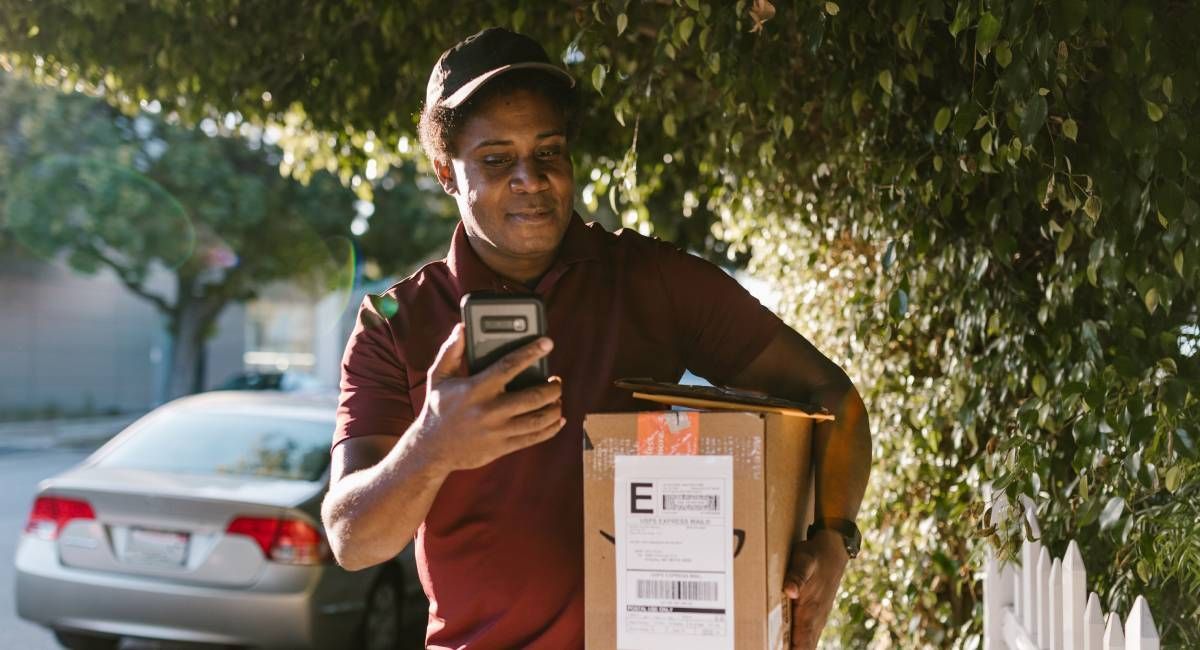
Courier delivering a parcel and checking his phoe ne
By Fiona Paton July 21, 2026
What is PAF? The Postcode Address File (PAF®) is Royal Mail’s definitive database of every deliverable address and postcode in the UK. It covers over 32 million delivery points and is updated monthly. If your business relies on accurate address data, at checkout, in your CRM, or for deliveries, PAF is the source that keeps it current. July 2026 in numbers Royal Mail made 54,025 changes to PAF this month. That is not a small number. It represents new homes that need delivering to, businesses that have moved or closed, streets that have been renamed, and addresses that were simply wrong and have now been corrected. Every one of those changes is a record in someone’s database that may now be out of date, and a delivery, a campaign, or a customer communication that could go wrong if the data hasn’t been updated. Delivery point changes at a glance Here’s the full breakdown of what changed, amended, and was removed from PAF in July:
Show More